Are Noiseless Mattress Protectors Really Silent? Here’s the Truth
“Noiseless” sounds great on a product page. But if you’ve ever bought a so-called quiet mattress protector and still heard that faint rustling at night, you’re probably skeptical. So let’s be honest and practical about it:
Are noiseless mattress protectors really silent?
The truth is: some are, many aren’t. The difference comes down to materials, structure, and how the mattress protector is actually used in real life.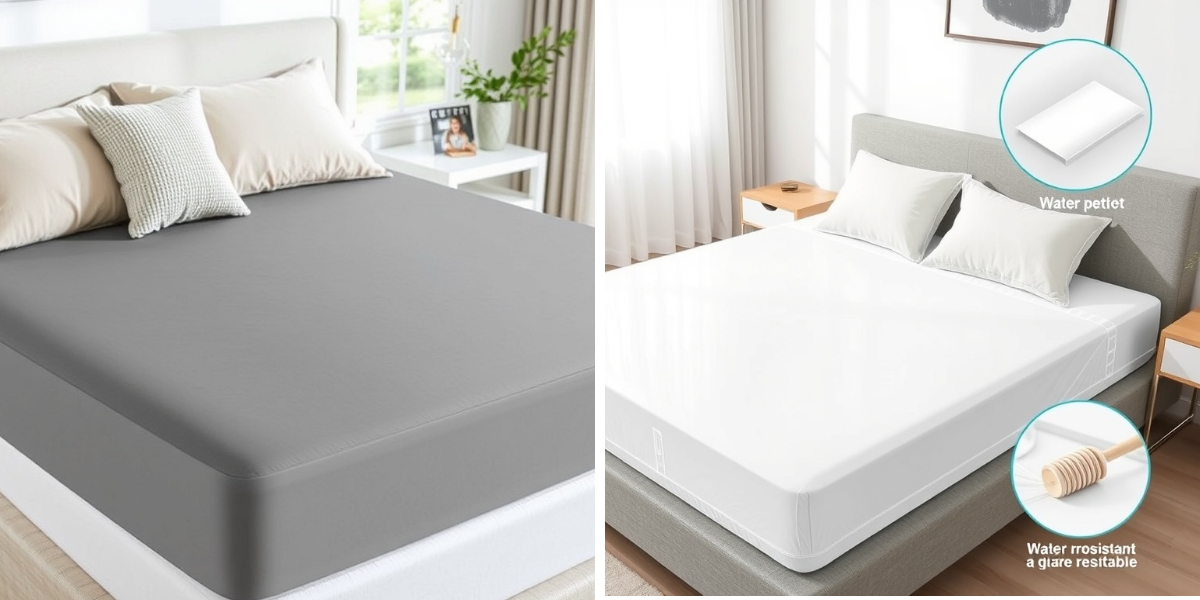
Where Mattress Protector Noise Really Comes From
Noise isn’t caused by movement alone — it’s caused by resistance.
When you turn over in bed, the fabric stretches, compresses, and slides. If the layers inside the mattress protector are stiff, they resist that movement. That resistance turns into sound.
The most common noise sources include:
Vinyl or PVC waterproof layers
Thick laminated plastic backing
Poorly bonded fabric and membrane
Loose mattress protector edges that shift overnight
This is why many traditional waterproof mattress protectors feel protective but sound distracting.
What “Noiseless Mattress Protector” Actually Means
A true noiseless mattress protector doesn’t eliminate waterproofing — it changes how waterproofing is achieved.
Instead of hard plastic, modern designs rely on soft textiles combined with flexible membranes. When done correctly, the protector moves with your body, not against it.
Key features that matter more than labels:
A soft fabric surface (microfiber, cotton terry, bamboo blends)
A thin, elastic waterproof layer
Tight bonding between layers
A fitted design that stays in place
If any one of these is missing, noise becomes more likely.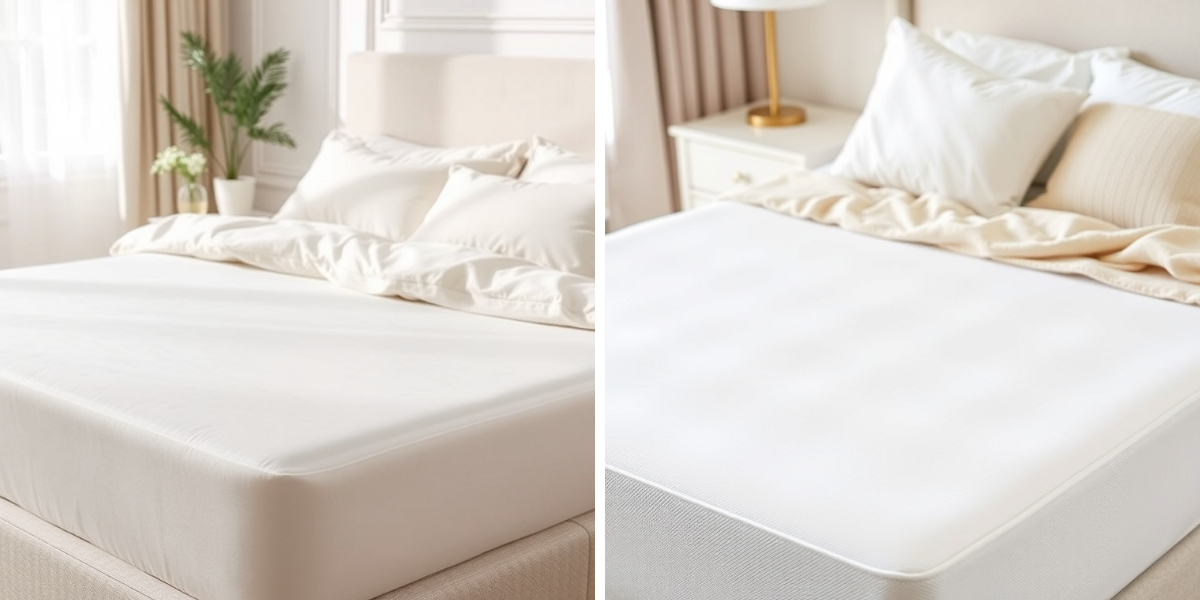
The Role of TPU in Silent Mattress Protection
Most genuinely quiet mattress protectors today use TPU (thermoplastic polyurethane).
TPU works because it’s:
Flexible, not brittle
Thin enough to bend silently
Durable through repeated washing
When paired with a soft top fabric, TPU creates a waterproof mattress protector that feels more like a fitted sheet than a plastic cover.
This is the material difference that separates a real noiseless mattress protector from a noisy one.
Are All Noiseless Mattress Protectors 100% Silent?
Here’s the honest answer: in normal use, yes — but not in every scenario.
In real bedrooms:
Normal turning, shifting, and stretching → silent
Sitting down or getting up → silent
Sleeping through the night → silent
But if you:
Crumple the protector in your hands
Pull it tightly off the mattress
Compare it directly to bare sheets in a silent room
You might hear slight fabric movement. That’s normal for any layered textile product.
The key point: it won’t wake you up at night.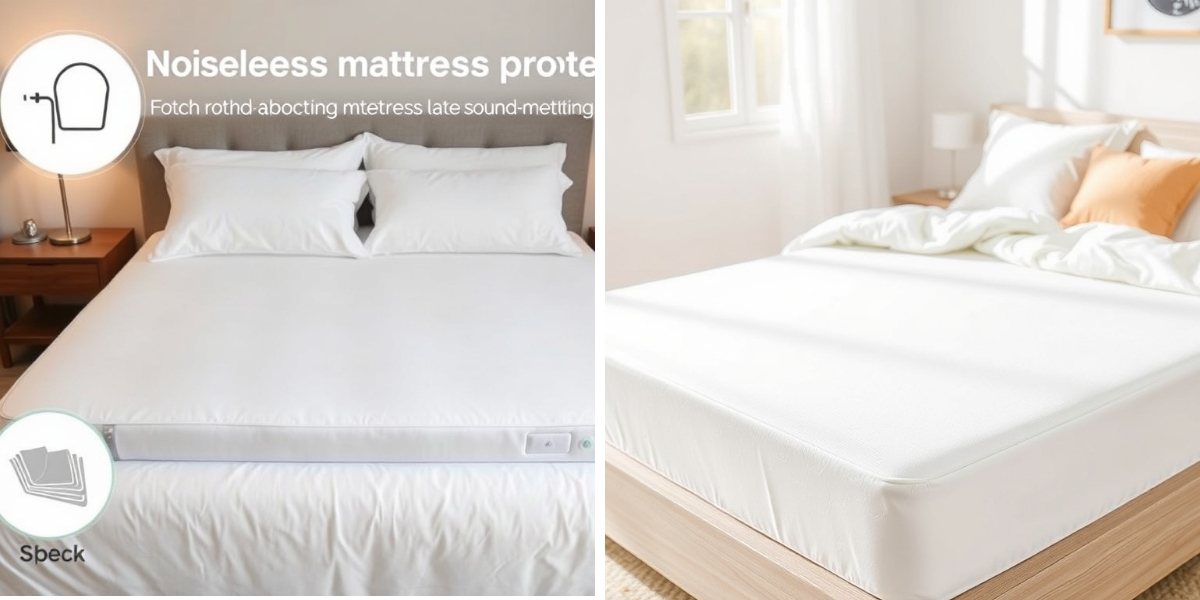
Fit Matters More Than Most People Think
Even the best mattress protector can become noisy if it doesn’t fit properly.
A well-fitted noiseless mattress protector:
Has elastic edges that grip the mattress
Covers the mattress tightly without excess fabric
Matches mattress depth correctly
Loose protectors slide. Sliding causes friction. Friction causes sound.
That’s why deep-pocket fitted mattress protectors tend to perform better, especially on thicker mattresses.
Noiseless Mattress Protector vs. Standard Waterproof Protector
From a user experience perspective, the difference is immediate.
A standard mattress protector often:
Feels stiff under sheets
Makes subtle noise when you move
Traps heat more easily
A noiseless mattress protector:
Feels soft and flexible
Stays quiet throughout the night
Maintains comfort while protecting the mattress
If sleep comfort matters more than just basic protection, the quieter option makes sense.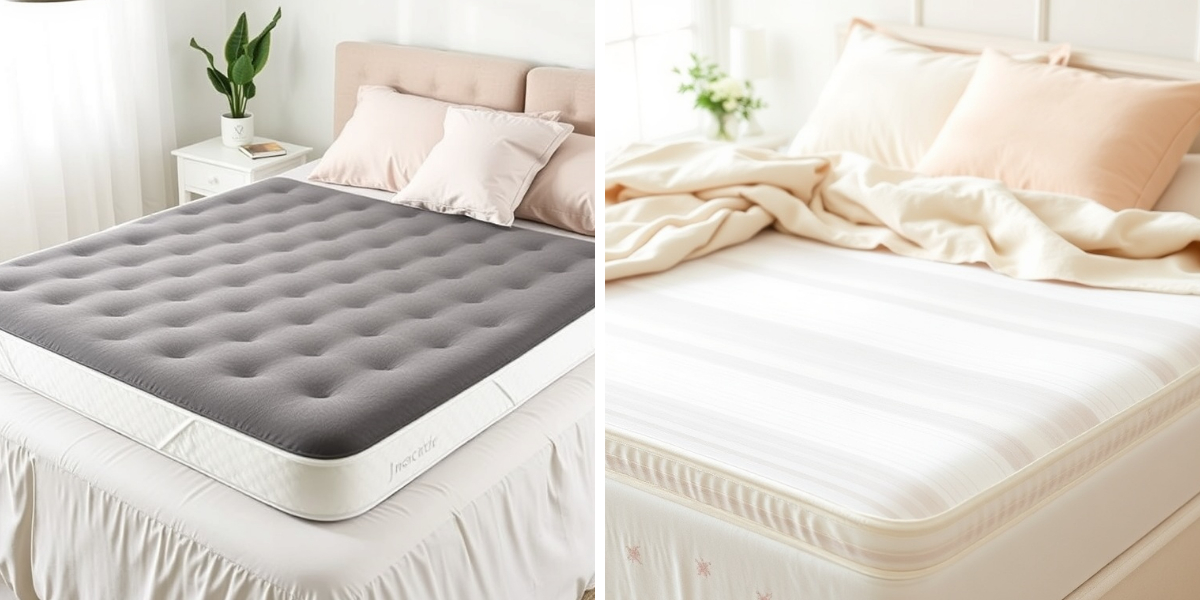
Who Benefits Most from a Noiseless Mattress Protector?
While anyone can use one, certain groups notice the difference immediately:
Light sleepers who wake easily
Couples, especially when one partner moves more
Hotels and short-term rentals, where guest comfort affects reviews
Families, particularly children’s beds
Anyone replacing a noisy vinyl mattress protector
Once you switch, it’s hard to go back.
Does Quiet Mean Less Protection?
This is a common concern, but the answer is no.
A quality noiseless mattress protector still protects against:
Spills and accidents
Sweat and body oils
Allergens and dust mites
The difference isn’t protection — it’s comfort and sleep quality.
Modern mattress protector designs no longer force you to choose between silence and waterproofing.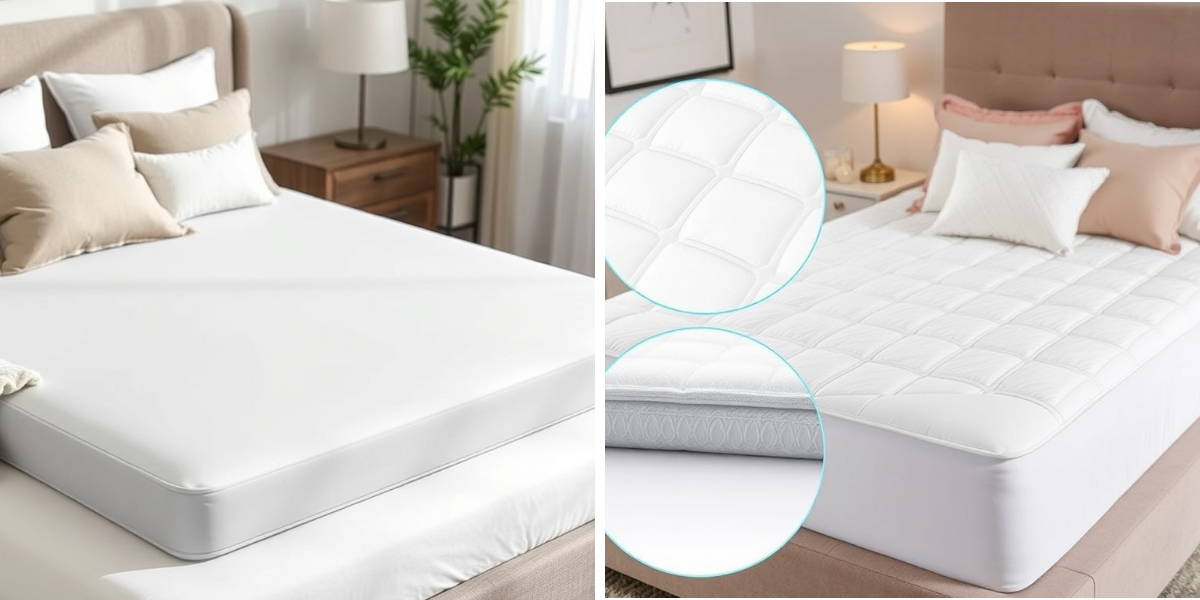
The Bottom Line: Are Noiseless Mattress Protectors Really Silent?
Yes — when they’re well made.
A true noiseless mattress protector:
Uses soft fabric and flexible waterproof layers
Fits the mattress securely
Makes no disruptive sound during sleep
If you’ve tried one before and were disappointed, the issue was likely material quality, not the concept itself.
Quiet sleep isn’t a luxury feature anymore — it’s what a good mattress protector should offer by default.