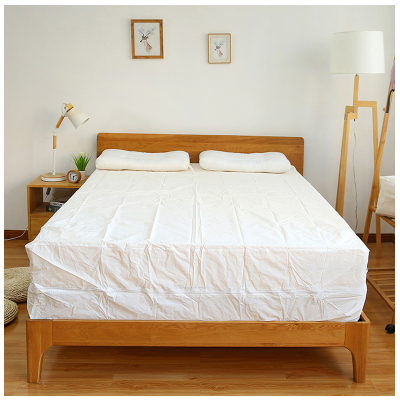
Why Users Worry About Heat Retention With Vinyl Mattress Cover
Many shoppers hesitate to pick Vinyl Mattress Protector due to the common concern that the plastic material traps body heat and causes stuffy sleep. Unlike air-permeable fabric Mattress Cover, pure vinyl features a fully non-porous barrier, which delivers complete waterproof performance as a Waterproof Mattress Protector yet blocks air circulation. The actual heat feeling varies based on mattress type, room temperature, bedding layers and cover structure, instead of being an absolute uncomfortable defect. Real Factors That Decide How Hot Vinyl Mattress Protector Feels
Underlying mattress material: Memory foam mattresses retain heat far more than spring mattresses, amplifying the warm sensation of vinyl covers.
Indoor ambient temperature: Hot summer rooms significantly worsen heat buildup, while cool winter environments reduce obvious discomfort.
Bedding layers above the cover: Lying directly on bare vinyl creates obvious heat accumulation; adding cotton sheets, mattress pads or fiber toppers effectively isolates heat.
Cover structure: Fully zippered encasement vinyl covers trap more heat than partial fitted top-only Mattress Cover.
For most households that lay soft breathable bedding over the vinyl layer, the heat issue becomes barely noticeable. This is the core reason vinyl covers remain widely used in commercial scenarios.
Unmatched Protective Advantages of Vinyl Mattress Cover
Vinyl Mattress Protector provides the highest level of liquid isolation among all common mattress cover materials. It fully blocks sweat, beverage spills, bodily fluids and disinfectant liquid without absorption, resisting stains, mold and mattress damage for long-term use. This irreplaceable waterproof performance makes it the standard Waterproof Mattress Protector for high-hygiene demand places: hospitals, nursing homes, hotels, Airbnb rentals, student dorms and families with toddlers or pets. In these scenarios, reliable mattress protection outweighs minor heat discomfort. Target Groups That Gain The Most Value From Vinyl Mattress Protector
Medical & Care Facilities
Healthcare venues prioritize disinfection convenience and fluid resistance. Smooth vinyl surface can be quickly wiped and sanitized, avoiding liquid penetration into mattress inner cores to cut replacement costs.
Hotel & Short-Term Rental Operators
Property owners avoid costly mattress replacement caused by guest accidents. Multi-layer bedding separates sleepers from vinyl, so heat complaints rarely appear among guests.
Families With Young Kids & Pets
Potty training spills and pet stains can permanently ruin mattresses. The affordable, fully waterproof Vinyl Mattress Protector acts as a cost-effective temporary protective barrier. Simple Ways To Reduce Heat Trapping Of Vinyl Mattress Cover
Lay breathable cotton or bamboo mattress pads, thick woven sheets above the Mattress Cover to boost air circulation.
Choose upgraded thin flexible modern vinyl styles instead of thick rigid old versions, which reduce plastic stuffiness.
Adjust indoor ventilation and room temperature, use cooling bedding accessories in hot seasons.
Material Comparison: Vinyl VS Other Waterproof Mattress Protector
Vinyl focuses 100% on waterproof and stain resistance with zero air permeability. PEVA, TPU and fabric composite Waterproof Mattress Protector balance breathability and liquid blocking but have weaker long-term wear resistance. Buyers make trade-offs based on core demands: choose vinyl if complete protection is non-negotiable, opt for fabric composite materials if cool sleep comfort is the top priority. Final Conclusion
Vinyl Mattress Protector does have the physical property to trap heat, yet this disadvantage can be easily relieved with layered bedding. As a heavy-duty Waterproof Mattress Protector, its all-round anti-liquid, anti-stain and easy-clean strengths are irreplaceable for commercial accommodation, medical institutions and accident-prone family bedrooms. When used with breathable top layers, the vinyl Mattress Cover delivers solid mattress protection without ruining daily sleep comfort, so it remains a mainstream protective bedding choice despite emerging breathable alternatives.